September 2025
participants: 7
I was afraid to take all this on me. it was the first time i would do a creative project with this particular group of people, so i saw this as an experiment we do together to see if we can make it.
it was a mixed group of people that knew each other or not, colleagues or not, with mixed backgrounds & different relationship with games.
I didn’t want to pressure anything.
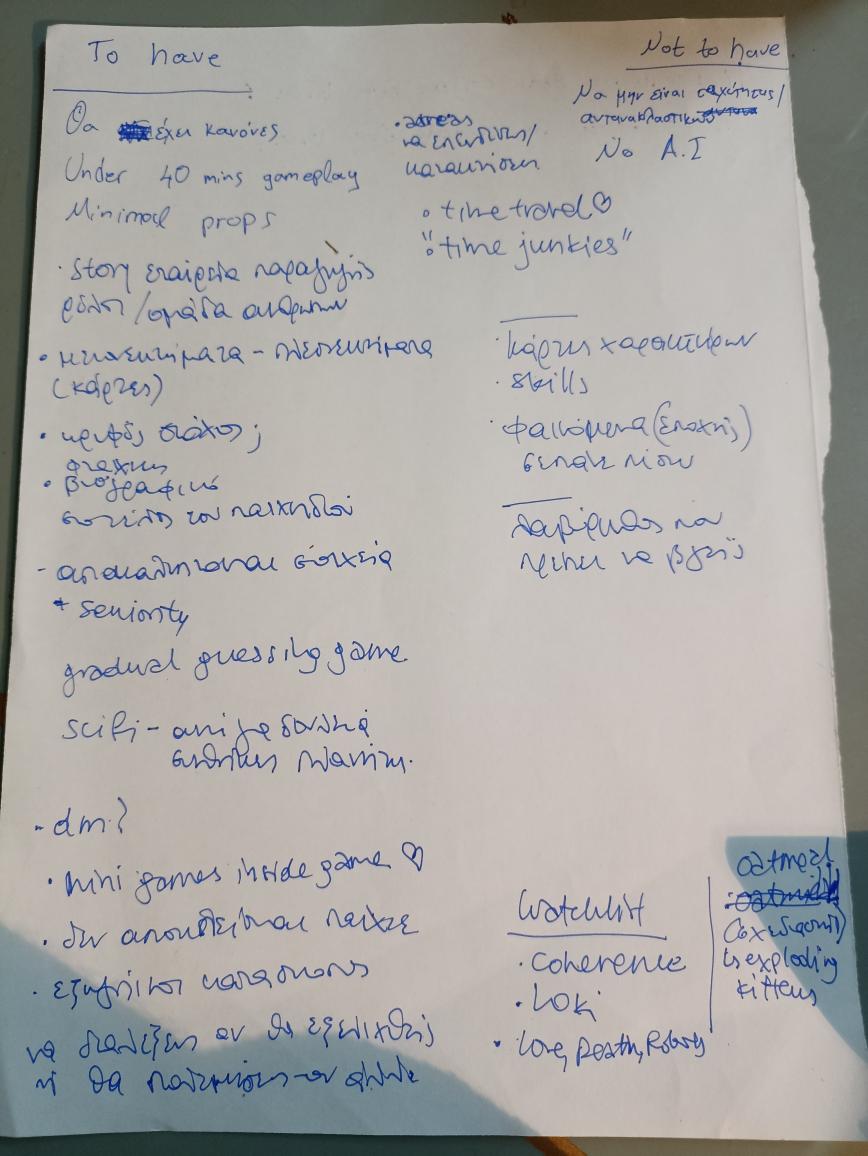
I had created a draft structure & timeline before this, but when the time came, we started casually discussing, then sharing what we like or don’t like, and people kept coming, and the conversation kept going.
I don’t remember the specific point, but the discussion soon turned to what we want to make & what we could make. We shared things each of us would like to have & things we didn’t want in our game.
then people had too leave different times, some of us continued to create a concept that kept changing as the time went. we kept some notes and we agreed we will continue this next time
one of the goals of game lab is to learn about game design, as non-experts. it is a place to try things, learn by doing and from each other. I count on learning from others, experienced players & gamers, as long as non gamers & what they enjoy as playful experiences.
The thing is when you are not an experienced player, you can easily feel overwhelmed by the discussions of more experienced players, the name dropping, all the things you have no clue about.
i am mostly concerned to be in creative processes that create space for everyone & everybody participates equally, all voices are heard etc.
this is a difficult balance to achieve. I felt this session had this tensity of people leading the conversation, while other feel more numb or even worse that they should be here ( I know it’s probably just in my head)
i was worried if non-gamers (including myself) had a great time & felt they actively contribute in the process. But this has actually to do with introverts/extroverts too. But again, good facilitation should take care of this dynamic.
i feel spending more time actually designing a game, and not talking about our relationship with games, would give more the feeling that we are a group trying to solve something & we are equally qualified because no one has a clue how to do this & collaborating with humans is unique (& not) each time.
& again this is where structure & facilitation should be to help